
Betrayal Trauma Therapy vs. Couples Counselling
← Back to the Betrayal Recovery Learning Centre
Finding out your partner betrayed you is one of the most disorienting experiences a person can go through. Within days, maybe even hours, people around you start offering advice. Go to therapy. Work on your relationship. See a couples counselor.
It sounds reasonable. But if you walk into the wrong type of therapy at the wrong moment, you can come out feeling worse than when you walked in. You might feel more confused, less heard, and no closer to knowing what you actually need. This guide is part of our Betrayal Recovery Learning Centre, designed to help you stabilize and find clinical clarity after discovery.
The difference between couples counselling and betrayal trauma therapy isn't a minor technical distinction. It’s the difference between a treatment that fits what you’re going through and one that doesn't.
In this article
These Two Types of Therapy Are Not Interchangeable
What Couples Counselling Is Actually Designed to Do
Why You Should Prioritize Individual Betrayal Trauma Therapy First
Why Starting With Couples Counselling After Infidelity Can Backfire
The Difference in Who the Client Is
When Couples Counselling Does Make Sense After Betrayal
What to Look for in a Betrayal Trauma Specialist
You Don't Have to Decide About the Relationship to Start Therapy
These Two Types of Therapy Are Not Interchangeable
Most people assume therapy is therapy. You sit in a room, you talk about your problems, and a professional helps you sort through them. However, the specific modality and focus of a session dictate everything about your clinical outcome.
Couples counselling and betrayal trauma therapy are built on different assumptions, serve different goals, and operate from different clinical frameworks. Using one when you need the other is a bit like being handed a cast for an injury that needs surgery. It isn't nothing, but it isn't what the situation calls for.
This isn't a criticism of couples counselling. It’s genuinely effective for many relationship challenges. Betrayal is a distinct kind of wound that requires a specialized approach to care.

What Couples Counselling Is Actually Designed to Do
Couples counselling is designed to work on the relationship as the primary unit. The therapist is, in effect, the couple's therapist. Both partners are considered clients. The goal is typically to improve communication, repair disconnection, work through conflict patterns, and strengthen the bond between two people who both want to be there.
Traditional couples counselling assumes a relatively level playing field. There may be tension, hurt feelings, or old resentments. But the underlying assumption is that both people are showing up with similar levels of agency and safety. It assumes the work of improving the relationship is something both partners are capable of engaging in right now.
After infidelity, that assumption breaks down immediately.
Why You Should Prioritize Individual Betrayal Trauma Therapy First
One of the most common mistakes is jumping into couples counselling before the betrayed partner has stabilized. While the urge to "fix the relationship" is strong, clinical recovery usually requires moving through specific stages of healing after betrayal trauma, starting with immediate stabilization. Doing couples work before you have moved past the initial shock and established internal safety can actually be counterproductive.
Betrayal trauma therapy recognizes that discovering a partner's betrayal (whether infidelity, pornography use, a secret life, or a pattern of lying) can produce symptoms that closely resemble post-traumatic stress. You might experience:
Intrusive thoughts and "mind movies"
Constant hypervigilance (checking phones, tracking locations)
Emotional flooding and physical shock
Sleep disruption and inability to eat

These aren't signs that you’re overreacting. They’re signs that your nervous system has registered a serious threat. Individual therapy must come first because you cannot effectively "work on a relationship" while your body is in a state of traumatic shock. By focusing on your own stabilization through modalities like Eye Movement Desensitization and Reprocessing (EMDR), Accelerated Resolution Therapy (ART), or Acceptance and Commitment Therapy (ACT), you build the internal ground necessary to eventually make clear decisions. The primary client in betrayal trauma therapy is you, not the relationship.
Why Starting With Couples Counselling After Infidelity Can Backfire
This is the part most people don't hear until they’ve already experienced it.
Couples counselling requires both partners to be relatively equal participants. It often involves sharing perspectives and working toward mutual understanding. In the immediate aftermath of betrayal, this format can place an unfair burden on the person who was hurt.
You may be asked to hear your partner's reasons, consider their emotional state, or engage in exercises designed to build empathy. Doing this while you’re still in shock and trying to figure out what was even real is exhausting.
Some people leave those early couples sessions feeling like they were somehow responsible for what happened. They might feel like their pain was just one item on a shared list of grievances rather than the central issue. That isn't the therapist's fault, necessarily. It’s a mismatch between the tool and the moment.
Clinical frameworks around betrayal trauma recovery consistently point to the same pattern: the betrayed person needs individual stabilization before couples work can be productive. Skipping this step often prolongs recovery rather than shortening it.
The Difference in Who the Client Is
This is worth saying clearly because it often surprises people.
In couples counselling, the therapist's client is the couple. The therapist holds both partners in mind and works toward outcomes that serve the relationship.
In betrayal trauma therapy, the therapist's client is you.
That shift matters enormously. It means the work isn't organized around saving the relationship or ending it. It’s organized around helping you get stable, get clear, and figure out what you need. The therapist isn't managing the feelings of two people simultaneously. They’re fully focused on yours. For someone who has had the ground pulled out from under them, that kind of focused support isn't a luxury. It’s often what makes healing possible.
When Couples Counselling Does Make Sense After Betrayal
Couples counselling isn't off the table forever. For many people, it becomes an important part of the process, just not the first part. Couples work tends to be most productive after a few specific things are in place:
The betrayed partner has had enough individual support to feel stable and grounded.
The partner who caused the harm has taken genuine accountability and demonstrated it through consistent behavior.
Both people have made a conscious choice to try to rebuild, without pressure.
When those conditions exist, couples infidelity counselling using the Gottman Method or Emotionally Focused Therapy (EFT) can be genuinely powerful. But that work builds on a foundation. It cannot create one.
What to Look for in a Betrayal Trauma Specialist
Not every therapist who lists infidelity as a specialty has specific training in betrayal trauma. When you’re looking for the right fit, ask a few things directly:
Do they have specific training in trauma-informed approaches like EMDR or ART?
Do they work specifically with betrayal trauma, or just general relationship issues?
What is their philosophy around outcomes? A specialist won't steer you toward staying or leaving. They’ll help you get clear enough to decide for yourself.
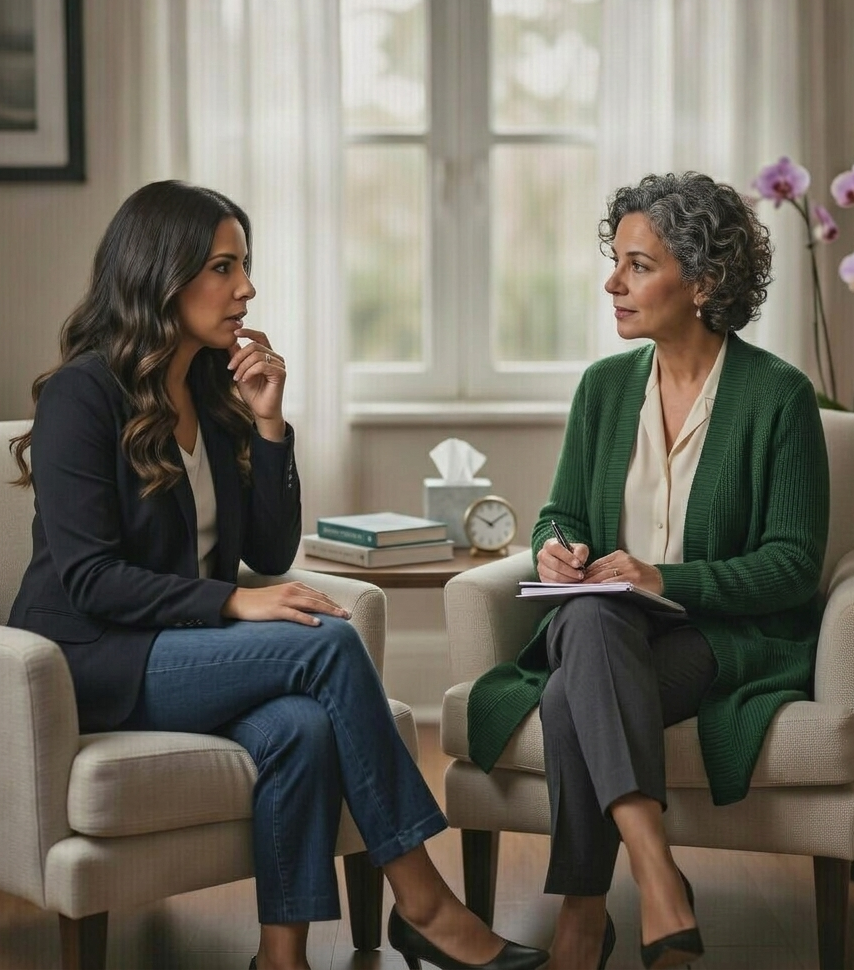
You should feel, from the first conversation, that this person understands what you’re going through without requiring you to convince them.
You Don't Have to Decide About the Relationship to Start Therapy
This might be the most important thing on this page. You don't need to know whether you want to stay or leave. You don't need to have made any decisions at all.
Betrayal trauma therapy doesn't require you to arrive with a plan. It’s the place where you figure out what you actually think and feel, underneath all the shock and noise. The goal isn't to tell you what to do. It’s to help you trust yourself enough to know what you need, and to give you the clarity and stability to act on it.
If you’re trying to figure out whether therapy is the right next step, booking a free consultation is a good place to start. No pressure, no predetermined agenda, just a conversation.
← Back to the Betrayal Recovery Learning Centre to explore more resources.