
How to Heal From Emotional Betrayal: A Clinical Recovery Guide
← Back to the Betrayal Recovery Learning Centre
There's a particular kind of pain that comes with emotional betrayal. It isn't clean. It doesn't announce itself with an obvious ending the way a sudden physical discovery might. Instead, it settles into everything—the way you see yourself, the way you read other people, and the way you move through a day that used to feel ordinary. If you're somewhere in the middle of that right now, feeling like you don't quite recognize your own life anymore, you're dealing with a specific clinical injury. This guide is part of our Betrayal Recovery Learning Centre, designed to help you stabilize and find clinical clarity after discovery.
Healing from emotional betrayal is possible. But it rarely looks the way people expect it to, and it almost never moves in a straight line. To recover, you have to stop treating this as a "minor" version of cheating and start treating it as the profound attachment injury it actually is.
In this article
Why Emotional Betrayal Feels Like a Shattered Reality
The Clinical Neurobiology of the Invisible Wound
Why Traditional Counselling Often Fails at This Stage
Reclaiming Your Identity and Self Trust
Managing the Timeline: Why Healing Usually Takes Longer Than You Think
The Roadmap Forward: Your Healing is Yours
Why Emotional Betrayal Feels Like a Shattered Reality
Not all betrayal looks the same. Emotional betrayal carries its own particular weight because of the invisibility involved. There may be no single moment you can point to or no clear line that was crossed on a specific date. Instead, there is the slow and devastating realization that something you believed was real was not. The person you trusted completely was living in a way that excluded you while remaining physically present in your home.
This creates what clinicians call cognitive dissonance. Your brain is trying to reconcile two versions of your partner: the "Kind Partner" who eats dinner with you and the "Secretive Partner" who shares their intimate world with someone else. Because these two versions don't fit together, your mind loops endlessly to try and solve the puzzle.
This ambiguity doesn't make the wound smaller. In many ways, it makes it harder to process because the nervous system cannot locate the threat with any precision. It just knows that something it depended on for safety has been compromised. If you're in the first few days of this realization, you need a manual for survival.

The Clinical Neurobiology of the Invisible Wound
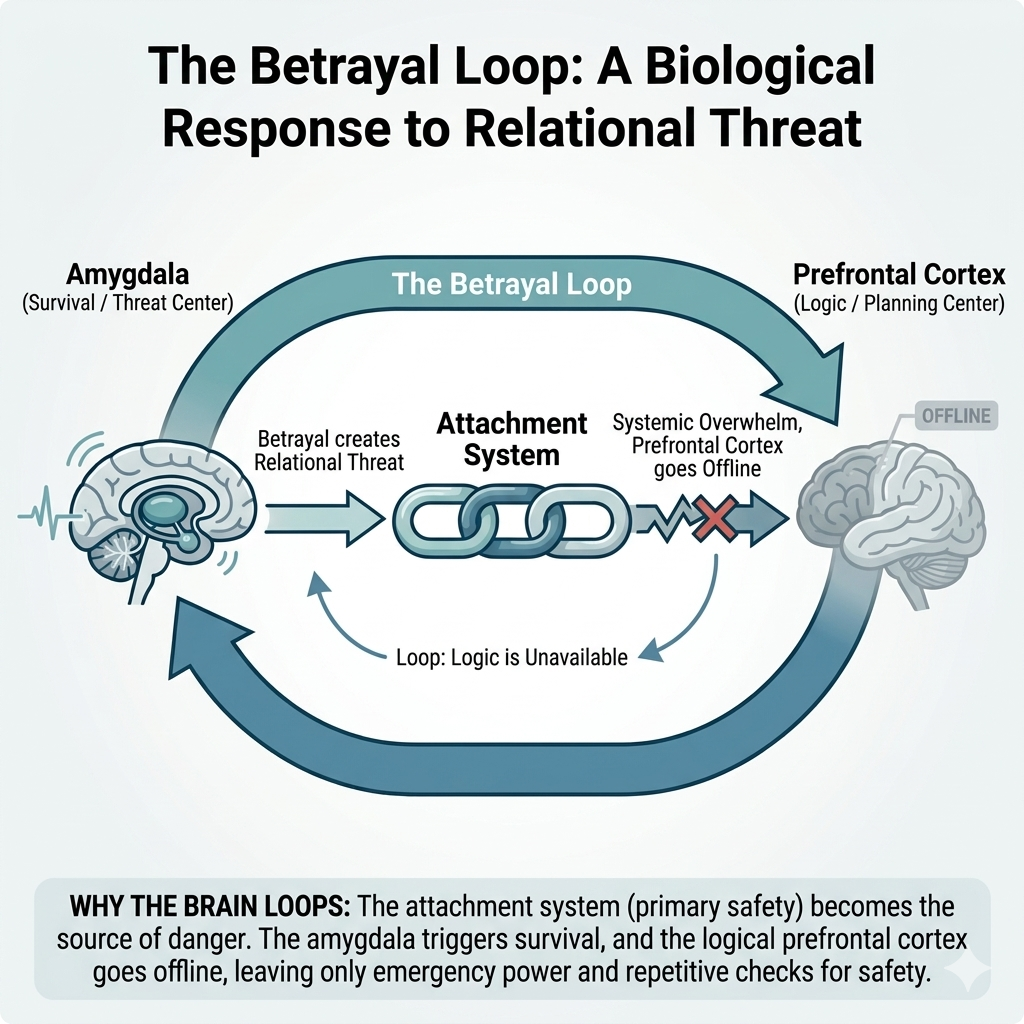
Your brain treats a betrayal of trust as a literal threat to your survival. When you're emotionally bonded to someone, your attachment system views them as your primary source of safety. When that person becomes the source of danger, your amygdala triggers a full fight, flight, or freeze response.
This is why you can't just get over it. Your prefrontal cortex, the part of the brain responsible for logic and planning, has essentially gone offline. You're operating on emergency power. This manifests as:
Hypervigilance: You're constantly checking for missed signals or timeline discrepancies.
Intrusive thoughts: Your mind replays conversations looking for the blank spots in the story.
Physical numbness: You feel disconnected from your own body as a way to manage the emotional load.
Understanding that these are biological responses, not personality flaws, is the first step toward healing. You aren't crazy or unstable. You're a person with a regulated nervous system that has been intentionally deregulated by deception and gaslighting.
Why Traditional Counselling Often Fails at This Stage
One of the biggest mistakes people make when healing from an emotional affair is jumping straight into marriage counselling. While it seems logical to fix the relationship, doing this too early can actually be retraumatizing. There is a place for couples infidelity counselling, but it comes after you have found your footing.
Traditional couples work often focuses on communication and shared responsibility. But in the wake of betrayal, there is no shared responsibility for the deception. There is a victim and there is a person who caused harm. If you haven't stabilized your own trauma response first, being forced to hear your partner's side can feel like a secondary assault on your reality.
The mandatory first step is individual stabilization. Specialized individual betrayal trauma therapy gives you a space where your reality is validated without compromise.
Clinical Insight: To understand why individual work must come first, read about the difference between betrayal trauma therapy vs couples counselling.
Reclaiming Your Identity and Self Trust
Emotional betrayal doesn't just damage the relationship. It fragments your sense of self. When your partner's reality doesn't match yours, you begin to doubt your own instincts. You might think, "How did I not see this?" or "What else am I missing?"
This is the most substantial part of the recovery process. You're cleaning a distorted mirror. You've been seeing yourself through the lens of someone else's secret choices. Healing requires you to stop looking in their mirror and start building your own through identity reclamation.
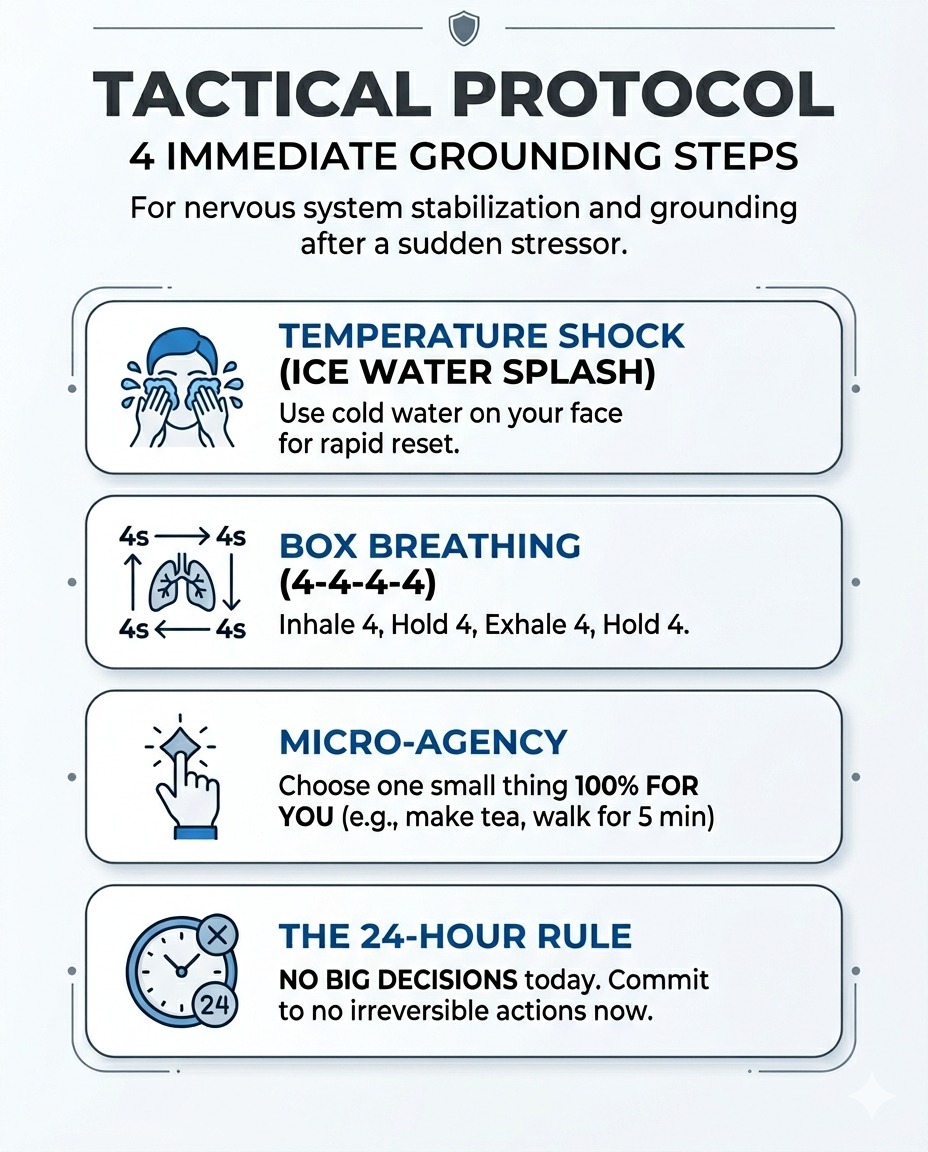
This is achieved through micro agency. You start making small, independent choices that have nothing to do with the betrayal. You pick the music you want to hear. You choose the food you want to eat. You honor your own no and your own yes. By doing this, you're slowly reparenting your intuition. You're building a body of evidence that your perception can, in fact, be trusted.
Managing the Timeline: Why Healing Usually Takes Longer Than You Think
One of the most frequent questions we hear is, "When will I feel normal again?" The honest answer is that there's no universal calendar, but the clinical picture usually involves a longer horizon than most people want to hear.
Healing from emotional betrayal is a process of integration. You're taking a shattered version of your life and trying to fit it into a new, more honest story. This takes time because your nervous system needs to see consistent safety evidence before it will drop its guard.
Most people notice that the ratio changes over time. At first, you're in a spiral 90% of the time. Eventually, it becomes 50%, then 10%. The betrayal triggers don't always disappear, but they lose their power to pull you under.
The Roadmap Forward: Your Healing is Yours
Your recovery is not dependent on your partner's choices. Whether the relationship survives or not, your ability to feel like a whole, grounded human being is something you can achieve on your own terms.
Healing is yours to keep regardless of what happens to the partnership. You're moving from being a victim of a secret to being the author of a new, more integrated life. You're learning to look at the past without being swallowed by it and at the future without being paralyzed by it.
If you're looking for a bird's eye view of where you are in this journey, we've created a betrayal recovery roadmap that categorizes the chaos into predictable stages.
The Master Map: To see exactly where you are and what comes next, read the 5 stages of healing after betrayal trauma.

Accessing Specialized Support in Canada
Healing from an emotional affair can be a heavy burden if you don’t have support. If you are in Alberta, you can learn more about our betrayal trauma therapy in Alberta and how virtual sessions work.
The Betrayal Care Team provides virtual, trauma informed therapy designed to help you stabilize yourself and reclaim your reality. We focus on you first and help you find your ground so you can make decisions from a place of clarity rather than confusion.
Ready to start your healing? Book a free consultation to speak with a licensed therapist today.
Note: We are now virtually serving all Canadians living in Alberta, British Columbia, or Ontario.
← Back to the Betrayal Recovery Learning Centre to explore more resources.