
Setting boundaries after infidelity: How to protect your safety and reclaim your agency
← Back to the Betrayal Recovery Learning Centre
Finding out your partner was unfaithful often feels like the floor has been pulled out from under you. In the days following a discovery, it’s common to feel like you have no control over your life anymore. The world that felt safe and predictable just twenty-four hours ago is now gone. You might find yourself oscillating between intense anger and a desperate need to know every detail of what happened. This guide is part of our Betrayal Recovery Learning Centre, designed to help you stabilize and find clinical clarity after discovery.
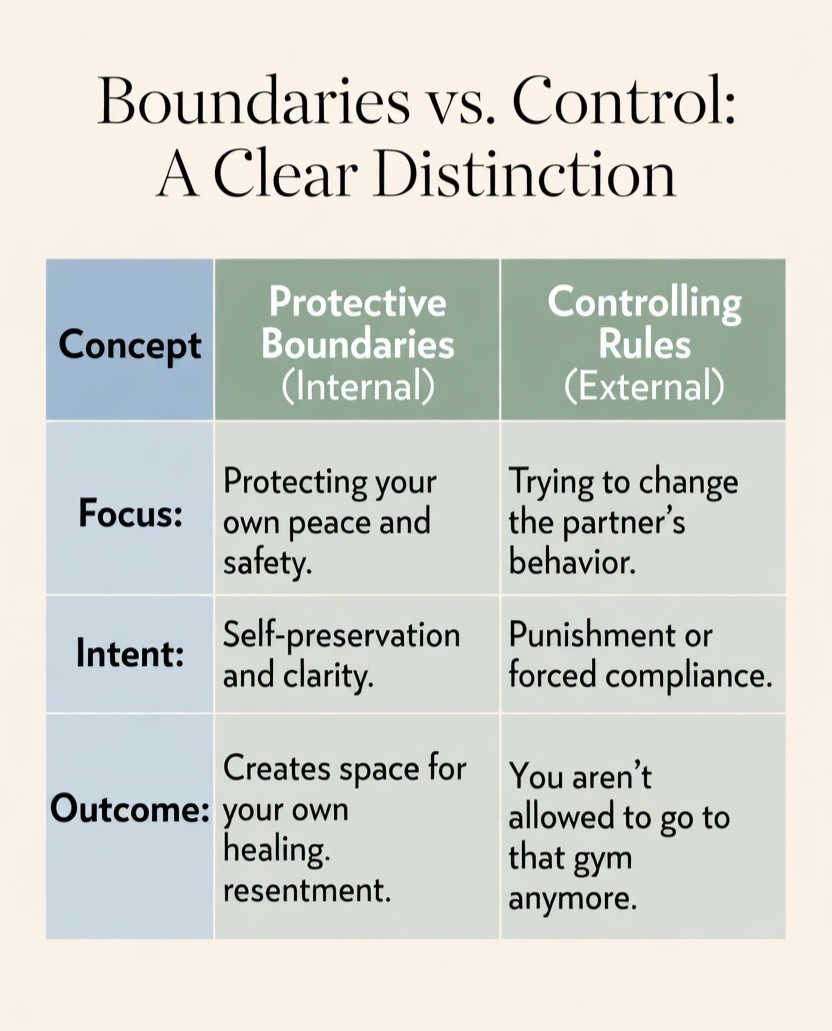
When you're navigating the initial shock, the concept of setting boundaries after infidelity can feel overwhelming. You might feel like a doormat in your own home, or perhaps you feel like a detective who's tired of being blindsided by new information. It's important to understand that boundaries are not about controlling your partner or issuing ultimatums. They are about establishing safety after betrayal and protecting your individual recovery process.
In this article
Why setting boundaries after infidelity isn't about punishment
Identifying the loss of agency after betrayal
Types of boundaries after an affair
Establishing safety after betrayal: Non-negotiables for recovery
The role of individual therapy for boundary setting
Communication boundaries for betrayal recovery
Creating a safety plan after cheating
Rebuilding your sense of self-respect
Accessing professional support across Canada
Why setting boundaries after infidelity isn't about punishment
There's a common misconception that boundaries are a way to "get back" at a partner who caused harm. This couldn't be further from the truth. In a clinical context, a boundary is a line you draw around your own physical and emotional space. It defines what you can and cannot tolerate right now to keep your nervous system from constant overwhelm.
Boundaries are for your protection, not their punishment. When you set a boundary, you're not telling your partner how to live their life. You're telling them how you will respond to their choices to keep yourself safe. This distinction is vital for rebuilding your sense of self-respect. Without clear boundaries, you remain in a state of chronic uncertainty, which fuels the gaslighting effect and keeps you stuck in a loop of panic.

Identifying the loss of agency after betrayal
Discovery of an affair often leads to a profound loss of agency after betrayal. You didn't choose this situation, yet you're the one dealing with the fallout. This lack of choice creates a high-stress environment where your brain is constantly scanning for threats. This is known as hypervigilance after cheating.
You might feel a desperate need for transparency, yet feel guilty for asking to see a phone or a bank statement. It's important to recognize that this hypervigilance is a biological survival mechanism. Your brain is trying to protect you from being blindsided again. Infidelity recovery boundaries provide the structure your nervous system needs to eventually exit this "fight or flight" mode. By creating clear expectations for transparency, you start the process of moving from confusion to clarity.
Types of boundaries after an affair
Every situation is different, and there's no one-size-fits-all list of requirements. However, most people find they need a combination of physical, emotional, and communication boundaries to function in the first few months.
Physical and sexual boundaries
Your body belongs to you. After a betrayal, many people feel a deep sense of nervous system overwhelm in the shared home. You may need to change the sleeping arrangements or establish that sexual intimacy is off the table for a period of time. These are non-negotiables for emotional safety. You're allowed to take as much time as you need to feel physically safe in your own environment again.
Emotional and communication boundaries
This involves deciding how much and how often you're willing to discuss the betrayal. You might say, “I need to know what is happening, but I don't want to be a detective every hour of the day.” Setting a specific time for difficult conversations can help prevent the "spiral" from taking over your entire life. It’s also helpful to look at the 5 Stages of Healing After Betrayal Trauma to understand why your emotional needs will shift as you move through different phases of recovery.
Establishing safety after betrayal: Non-negotiables for recovery
For any hope of repair, certain boundaries must be absolute. These aren't suggestions; they are the foundation upon which any future relationship must be built. If these are not met, it’s often a sign that you need to prioritize your own path forward.
Total cessation of contact: The partner who was unfaithful must cut off all contact with the other person. This includes social media, "checking in," or accidental meetings.
Full therapeutic disclosure process: Healing can't happen on a foundation of half-truths. You have a right to a clear and honest timeline of events.
Digital transparency: This might include shared passwords or access to devices for a set period. This isn't about "policing." It’s about providing the data your brain needs to stop the constant scanning for danger.
Honest communication: No more "trickle-truthing." A single new lie can reset your recovery clock back to day one.
If you find that your partner is unwilling to respect these non-negotiables, you may need to make a decision on whether you should stay or leave.
The role of individual therapy for boundary setting
Setting boundaries is hard, especially when you're exhausted and grieving. You may feel like you don't have the strength to hold the line. This is where individual betrayal trauma therapy becomes indispensable.
At Betrayal Care, we use trauma-informed modalities like Accelerated Resolution Therapy (ART), EMDR, and Acceptance and Commitment Therapy (ACT) to help you stabilize your nervous system. Working with a specialist allows you to explore your boundaries in a safe, non-judgmental space. We help you distinguish between what you "should" do according to friends and family and what you actually need to feel secure.
It’s often a mistake to jump into relationship work too soon. You may want to learn the difference between betrayal trauma therapy and couples counselling to understand why individual stabilization must come first. When both partners are truly ready, couples infidelity counselling can support the repair process.
Communication boundaries for betrayal recovery
One of the most difficult parts of setting boundaries after infidelity is managing the intrusive thoughts that lead to constant questioning. You might feel like you're losing your mind as you try to piece the timeline together.
Establishing a boundary around "the conversation" can be a powerful tool for your sanity. For example, you might agree to only discuss the affair for one hour on Tuesday and Thursday evenings. This creates a "container" for the trauma. Outside of those times, you are focusing on your own life.
Creating a safety plan after cheating
A safety plan isn't just for physical danger. It’s a roadmap for emotional crises. If your partner violates a boundary, what is your plan? Having a predetermined response prevents you from having to make a high-stakes decision while in a state of emotional flooding.
Your safety plan might include:
A list of safe people you can call at 2:00 AM.
A "go-bag" or a pre-arranged place to stay if you need a night away from the house.
A commitment to yourself to step away from a conversation if it becomes disrespectful or dismissive.
Specific nervous system stabilization techniques like deep breathing or grounding your feet on the floor.
Rebuilding your sense of self-respect
The ultimate goal of boundary setting is reclaiming your reality. Betrayal often makes you feel like you've lost your voice. Every time you state a boundary and hold it, you are telling yourself that you matter. You are announcing that your safety is more important than your partner's comfort.
This process is about protecting your individual healing process. Whether you eventually choose to rebuild the relationship or move forward on your own, these boundaries are the training wheels for a new version of yourself. A version that trusts their own intuition and values their own peace. You are not a doormat. You are an individual navigating a complex injury, and you deserve to have your boundaries respected.
Accessing professional support across Canada
Navigating the nuances of relationship boundaries after cheating is a heavy burden to carry alone. You don't have to figure it out by yourself. The Betrayal Care Team is here to provide the clinical structure and warm support you need.
Our registered therapists in Alberta, British Columbia, and Ontario are specialists in clinical standards for trauma-informed care. We serve clients through virtual therapy across Canada, providing a safe space for you to find your ground again. Whether you're in Vancouver, Toronto, or Calgary, you can access specialized support tailored to your unique situation. If you are in Ontario, you can read more about our betrayal trauma therapy in Ontario and how it supports boundary work.
Book a free consultation to speak with a betrayal trauma therapist about how we can help you set the boundaries you need to heal.
← Back to the Betrayal Recovery Learning Centre to explore more resources.